
By Andy Jacobs
In the world of open water swimming, a challenge often faced by swimmers, both novice and experienced, is the inefficiency in their stroke technique. As a swim coach and a fervent open water swimmer myself, I have seen this issue affect performance, energy levels, and overall enjoyment of the sport. This post is a deep dive into how swimmers can enhance their stroke efficiency, a topic that resonates with me as I prepare for race season.
The problem of inefficient stroke technique typically stems from a combination of factors: imbalances, lack of coordination, and insufficient propulsion. These issues can lead to higher energy expenditure, resulting in slower swim times and increased fatigue. The solution lies in understanding and refining the stroke mechanics, and more importantly, adapting these techniques to the unique demands of open water environments.
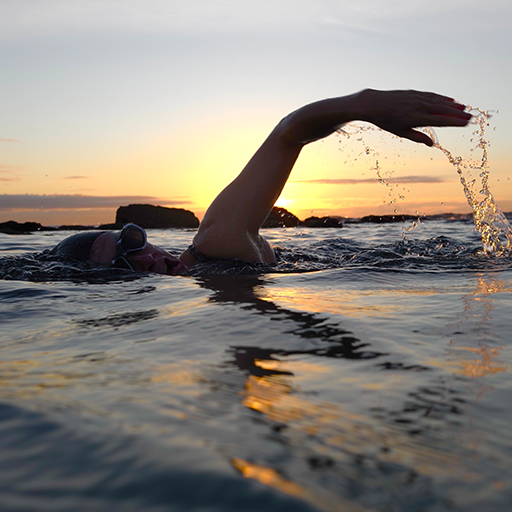
At the heart of efficient swimming is the stroke technique. An elongated stroke allows for more water to be caught with each movement, translating to more distance covered per stroke. This is not just about reaching forward but also about pulling through the water effectively. Equally crucial is the high elbow catch, a technique that ensures maximum propulsion and helps in maintaining a steady, rhythmic stroke. Another vital aspect is the practice of bilateral breathing. Not only does this help in maintaining balance in the water, but it also ensures symmetry in the stroke, reducing the risk of injury and enhancing efficiency.
Unlike the controlled environment of a pool, open water swimming is dynamic and ever-changing. Swimmers need to be adaptable, adjusting their strokes to accommodate various factors like current, waves, and even the presence of other swimmers. This adaptability extends to how energy is managed in the water. Efficient swimming is not just about how hard you swim but how smartly you use your energy. This involves understanding the dynamics of water resistance and using your body’s natural buoyancy to your advantage.
Endurance in open water swimming is as much mental as it is physical. Building stamina requires not just physical training but also mental resilience. The ability to maintain focus and stay calm in varying water conditions is as important as the physical strength to swim long distances.
Improving stroke efficiency is an ongoing process that involves continuous learning and practice. One effective method of improvement is through regular video analysis. Watching oneself swim can provide invaluable insights into areas that need refinement. This, coupled with targeted strength training, particularly focusing on the core and upper body, can significantly improve stroke efficiency. Swimming drills play a critical role in this improvement process. Drills like catch-up strokes, single-arm swimming, and sculling help in isolating and improving specific aspects of the stroke, thereby enhancing overall efficiency.
Nutrition and rest are also key components in the journey towards efficient swimming. A well-balanced diet fuels the body for endurance and recovery, while adequate rest ensures that muscles have time to repair and strengthen.
Enhancing stroke efficiency in open water swimming is a journey that encompasses a variety of aspects, from physical training and technique refinement to mental resilience and adaptability to environmental conditions. With dedication, consistent practice, and a focus on these key areas, swimmers can see a significant improvement in their performance.
 AquaEdge Swim Academy
Leave a comment