
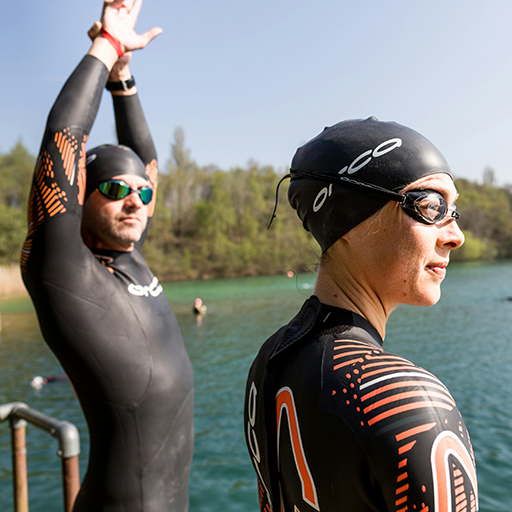
- Course Mastery & Smart Start: Gain an edge by thoroughly understanding the course layout and strategically planning your route. Begin with a strong, but sustainable pace to secure a favourable position early on, keeping in mind the buoy locations. Personal experience, like my own at the Pier to Periginon swim, underlines the advantage of avoiding congestion and utilising currents effectively.
- Early Pace Setting & Energy Conservation: Establish your rhythm quickly, aiming to stay with the lead group. Utilise drafting techniques effectively behind a leading swimmer to save significant energy, a crucial tactic for race endurance.
- Optimising Drafting Dynamics: Master the art of drafting by staying close to the leading swimmer, ideally between their ankles and hips, to maximise energy conservation. Be aware of their kick strength to adjust your position and minimise drag, enhancing your overall efficiency.
- Strategic Positioning & Technical Adjustments: Position yourself at the forefront to ensure clear navigation and avoid delays. Focus on maintaining consistent speed and efficient stroke technique, adapting your breathing and head position as necessary for optimal performance.
- Endurance Training & Mental Preparation: Engage in group training in similar race conditions for mental and physical resilience. Develop your sighting and navigation skills, and be mentally prepared for the intense physicality of open water races, including potential contact with other swimmers.
Developing a smart race strategy for open water swimming requires a blend of physical preparation, mental toughness, and tactical acumen. As an open water swim coach and competitor, I’ve found that the nuances of race strategy are often what differentiate a good swim from a great one.
Firstly, understanding the course is paramount. Knowing where the buoys are and planning your route can be crucial to success. A smart strategy might involve starting strong to get a good position, but not so fast that you burn out early. The importance of pacing and positioning right from the start of the race cannot be over-emphasised. Whether the race begins with a dive, from the beach or from in the water, it’s critical to position yourself advantageously while keeping in mind the route to the first buoy. Some swimmers prefer an outside route to avoid congestion, while others aim for a more direct path. (During last year’s Pier to Periginon open water swim, I experimented with positioning myself on the far right (next to the rocks of the Sorrento pier), avoiding the congestion from the race start, as well as taking advantage of the strong current).
Strive to establish your pace and rhythm early in the race, ideally keeping up with the leading group. This position allows you to leverage the drafting technique from a swimmer ahead, conserving a significant amount of your energy.
The wave created by a swimmer, known as the bow wave, moves both forward and sideways. The speed and size of the swimmer ahead influence the quality of the draft you experience. The closer you are to them, ideally between their ankles and hips, the more effective the draft. Essentially, you’re riding the bow wave, which extends the length of the swimmer’s body, thereby conserving energy. However, be cautious if the swimmer in front is kicking vigorously, as this creates more water turbulence. In such cases, position yourself slightly higher on their body to reduce drag.
Drafting also offers the advantage of not having to constantly lift your head for navigation. The swimmer in front does the sighting for buoys and direction, allowing you to focus on maintaining a smooth path in their slipstream. This strategy is particularly beneficial for conserving energy throughout the race, especially when preparing for the final push towards the finish.
Being at the forefront of the pack has its advantages too. It provides a clearer path for navigation, reducing the likelihood of being delayed by other swimmers as you manoeuvre around buoys.
Technique adjustments are also crucial. Consistent speed and efficiency in stroke can conserve energy. Key factors here include maintaining a good head position and effective breathing. For instance, bilateral breathing can provide a balanced view of the surroundings, though it’s not essential if you’re more comfortable breathing to one side.
Toward the end of the race, staying with the front pack becomes increasingly important. This is where strategic thinking and experience come into play. Knowing when to sprint and how to position yourself to avoid collisions in the final push can make a significant difference.
Group training, particularly in open water, is invaluable. It not only provides safety and support but also simulates race conditions. Practicing in a group helps you get used to physical contact, navigation challenges, and strategic decision-making in a crowded field. This kind of training fosters mental resilience and technical improvement, especially in the art of drafting and navigating through a pack of swimmers.
Mental preparation is another key aspect. Open water races can be physically intense and sometimes involve contact with other swimmers. Being mentally ready for this and maintaining focus on your technique and race plan is crucial. Practicing in conditions that simulate race day, including crowded swim starts, can help build this mental fortitude.
Sighting and navigation are skills that require practice. Efficiently lifting your head to sight while maintaining your stroke rhythm is important to ensure you’re swimming the shortest and fastest route. Additionally, latching onto a faster swimming group for drafting can be beneficial, though it does require trust in their navigation skills.
A study of the 2017 FINA World Swimming Championships revealed that regardless of the race length, medal-winning swimmers demonstrated a consistent ability to manage their distance from the leaders, maintaining a gap of approximately 10 to 15 seconds for most of the race. For shorter distance swims, the tactical positions adopted by successful swimmers across different race lengths, a distinct approach was observed in the 5-km event compared to the 10-km and 25-km races. In the 5-km races, top swimmers positioned themselves at the forefront of the main group right from the start. They maintained a minimal gap from the leaders, typically less than 5 seconds or about 5 meters.
A smart race strategy in open water swimming is a blend of physically, tactical intelligence, and mental strength. It involves careful pacing, efficient technique, strategic positioning, and psychological readiness for the unique challenges of open water events. As with any sport, personal experience and the nuances of each race will guide specific strategy choices, but these principles provide a strong foundation for success.


 AquaEdge Swim Academy
Leave a comment