
Key Points to remember
- Transition Challenges: First-time open water swimmers often struggle with the loss of visual cues like lane lines and pool walls, leading to disorientation and difficulty in maintaining a straight swimming path.
- Feeling of Vulnerability: The vastness of open water can make swimmers feel exposed and vulnerable, intensifying fears about depth, marine life, and losing sight of the shore or safety points.
- Adjustment to Water Conditions: Swimmers may experience shock from colder temperatures and difficulty coping with natural elements like waves and swells, which differ significantly from the controlled environment of a pool.
- Equipment Familiarity: Adapting to open water equipment such as wetsuits and different goggles can be challenging, as these can alter swimming dynamics and visibility.
- Psychological Hurdles: Overcoming psychological barriers such as fear, self-doubt, and the feeling of isolation is crucial for transitioning successfully from pool swimming to thriving in open water environments.
As an open water swim coach training triathletes, Ironman competitors, and pool swimmers, I’ve guided many athletes through their first foray into open water swimming. It’s a thrilling but daunting transition, especially for those accustomed to the structured environment of a pool. The experiences of first-time open water swimmers can be quite profound, and understanding these challenges is the first step in helping them adapt and thrive.
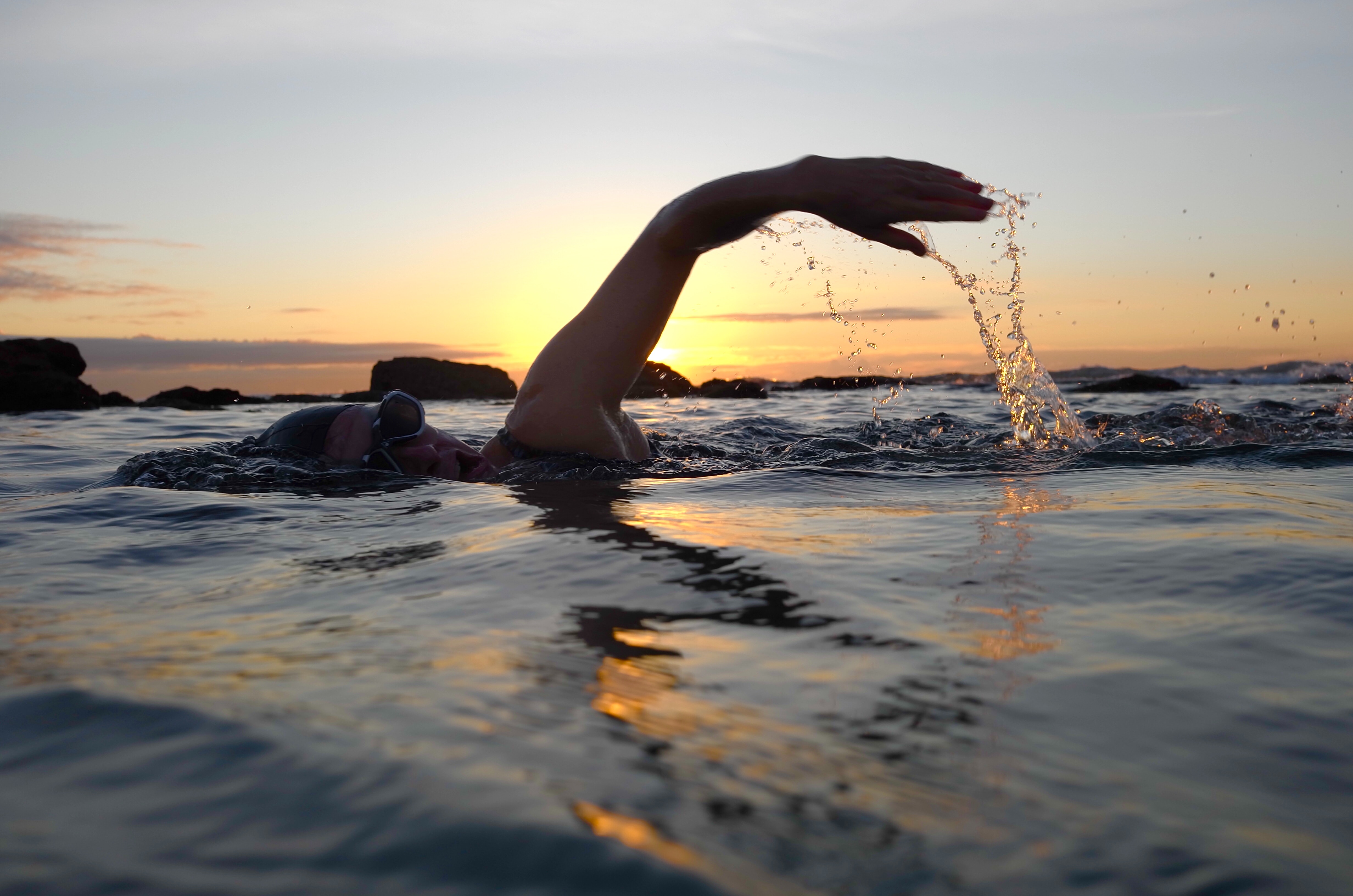
I have coached many dedicated pool swimmers who have decided to venture into open water. In the pool, they were used to the clear visual cues such as lane lines, wall ends, and the bottom of the pool, which not only guide direction but also provide a sense of security and orientation. Their first open water swim is usually a stark contrast; the lack of these familiar markers often leads to disorientation, as they sometimes report feeling like they are “swimming in a void.” They also usually struggle to maintain a straight course, frequently veering off path, which only heightens their anxiety about swimming in the wrong direction or going too far from safety.
The vastness of the open water environment can also instill a sense of vulnerability—a feeling these swimmers were unaccustomed to in the predictable confines of a pool. The inability to simply stand up or reach out to grab the lane rope when fatigued makes them feel adrift, amplifying their sense of exposure. Additionally, the thought of potential hazards such as currents, marine life, and passing boats keeps them constantly on alert, distracting them from focusing on their swimming technique.
The transition also introduces them to the unpredictability of open water conditions. Accustomed to the controlled temperature of a heated pool, the cold shock of natural waters can be initially jarring, causing their breathing to become shallow and rapid, which can exacerbate their anxiety. Not to mention the challenge posed by rough waves and swells, which can disrupt their usual swimming rhythm and make it difficult to maintain consistent strokes.
Equipment can be another hurdle. Some swimmers are not used to wearing a wetsuit, which, while offering buoyancy and warmth, feels restrictive and alters their swimming dynamics. This requires a significant adjustment in their stroke and body position to accommodate the added buoyancy and resistance. Their goggles, too, often fog up more than usual, and without the clear boundaries of a pool to stop and adjust, this adds to their sense of disorientation.
These psychological barriers—fear, self-doubt, and the sensation of isolation—are perhaps the most challenging aspects of their transition. Swimming without the immediate presence of coaches or lane mates can lead to a profound sense of being alone in the vast body of water, which can be incredibly intimidating.
A simple tool for helping with Open Water Anxiety
Research has shown that specific yogic breathing techniques can significantly enhance a swimmer’s physiological parameters, helping to manage the stress and anxiety associated with open water conditions. For example, practicing deep, controlled breaths can help maintain a calm state by increasing oxygen flow and regulating heart rate, which are crucial for managing the initial shock of cold water and the overwhelming nature of the open water environment (Kökény, 2016). These breathing techniques not only prepare the body physically by increasing red blood cells and hemoglobin for better oxygen transport, but they also provide a calming effect on the psyche, aiding swimmers in coping more effectively with the challenges of open water swimming.
As a coach, I address these experiences by slowly integrating new open water swimmers into their natural environment, combining physical preparedness with psychological support. We start with short, shallow water sessions where visual cues like buoys are added, and progressively increase the complexity of the swims. I accompany them in the water, providing constant feedback and encouragement, and we debrief after each session to discuss emotions, fears, and breakthroughs. Over time, these swimmers learn to adjust their techniques, embrace the new equipment, and, most importantly, transform their fear into excitement and confidence.
By understanding and addressing these initial experiences, we can guide first-time open water swimmers through a successful transition, helping you not only to adapt but also to excel in this exhilarating sport.
What does the latest research say?
For swimmers new to the open water who find themselves experiencing crippling anxiety, there are several effective self-help techniques to manage stress and anxiety. One practical method is using “cognitive restructuring” techniques to address dysfunctional thoughts. Cognitive restructuring involves identifying and challenging negative thoughts and replacing them with more balanced and positive alternatives. For instance, replacing the thought “I’m in danger” with “I am prepared and capable of handling this situation” can help reduce feelings of panic and increase feelings of control.
Another technique involves grounding exercises which help redirect attention from anxiety to the present moment. This can be achieved by focusing on sensory experiences such as the feel of water on skin, the rhythmic sound of breathing, or the sight of the horizon. This method helps in detaching from overwhelming emotions and anchoring the mind in the present, reducing anxiety levels effectively.
These methods are derived from behavioural approaches that are known to help athletes manage performance anxiety by focusing on the task at hand and maintaining a positive and present-oriented mindset (Sanit-Martin, Turner, & Ruiz, 2020). By incorporating these strategies, swimmers can regain their composure and continue their activity with renewed focus and reduced anxiety.
Absolute Beginner?
We have you sorted.
Have you always dreamt of gliding through open waters but felt held back by nerves? Or are you an aspiring triathlete excelling in running and cycling but hesitant about the swim? At AquaEdge, we specialise in transforming apprehension into achievement. Our experienced coach creates a nurturing and safe environment, perfect for beginners and first-time triathletes. We’re not just about teaching you to swim; we’re about instilling confidence, building skills, and turning your aquatic aspirations into reality. Join us for a completely obligation free 15 minute open water swim assessment.
 AquaEdge Swim Academy
Leave a comment