
Race speed
Free articleCan compression cuffs help a 100m swimmer? A cautious look at new research
A small randomised study found promising 100m freestyle results from an eight-week blood-flow cuff protocol. Here is what it means - and does not mean - for swimmers.
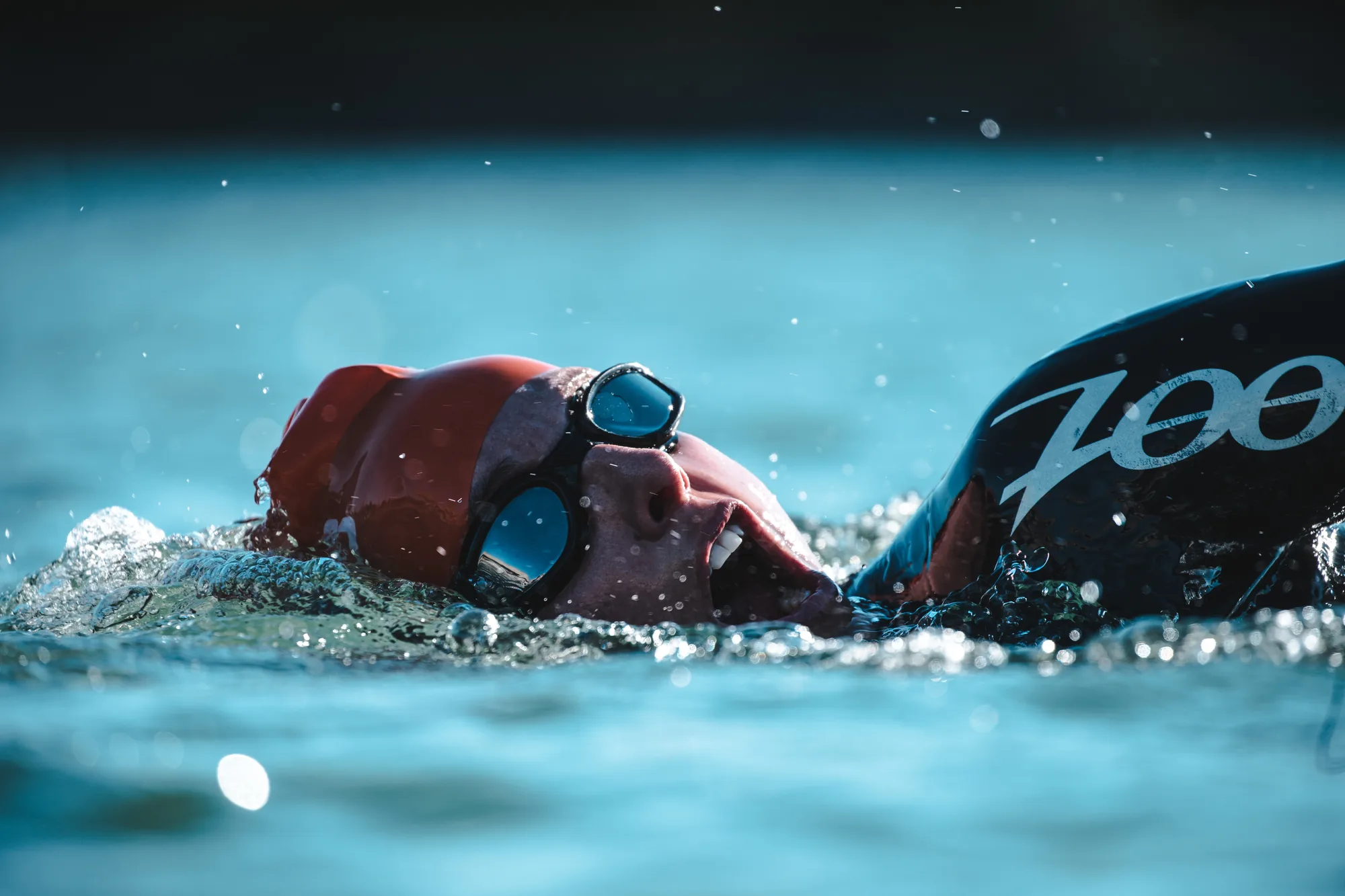
Every swimmer who has raced a 100 freestyle knows the feeling: the first 50 can be sharp and controlled, then the last 25 asks a much harder question. Can you keep applying force, hold your line and finish the race without the stroke unravelling?
A new randomised study looked at an unusual way of trying to improve that second half: ischemic preconditioning, often shortened to IPC. It found a promising result in a small group of male university 100-metre freestyle swimmers. But it is important to read the result with the right amount of interest - and restraint.
The research is not a reason to buy a cuff or copy a protocol at home. It is an interesting early finding about a highly controlled intervention, and a useful prompt to think about what actually decides the back half of a 100.
What is ischemic preconditioning?
IPC uses specialised cuffs to briefly and deliberately restrict blood flow to a limb, followed by periods where blood flow returns. In this study, the cuffs were placed high on both thighs before training. The research group used much higher pressure than the sham group, under a defined protocol and supervision.
That is not the same as using recovery boots, wearing tight compression gear or simply adding more lower-body work. It is an intervention designed to create a particular physiological stress. The study excluded people with hypertension, heart disease and other circulatory or metabolic conditions, and it used screened, trained athletes.
For that reason, this is not a technique to try without qualified clinical and performance guidance. The paper itself describes a preliminary result, not a standard training method for everyday swimmers.
What the study found
Eighteen male university swimmers, all 100-metre freestyle specialists, were randomly allocated to an IPC group or a sham-cuff group. Both groups followed the same swimming training. Three times a week for eight weeks, the IPC group completed the cuff intervention before training; the researchers tested 100-metre performance, split times and a 30-second bike power test before, halfway through and after the program.
After eight weeks, the IPC group averaged 57.57 seconds for the 100 metres, compared with 59.90 seconds in the sham group. The clearest difference was the second 50: 30.15 seconds in the IPC group versus 32.32 seconds in the sham group. The IPC group also produced greater peak and average power in the bike test and had a lower fatigue index.
The key point is not that the cuffs made swimmers magically faster. The result suggests that the intervention may have helped this particular group preserve power and resist fatigue late in a 100.
Why the second 50 matters
The last half of a 100 is not just “fitness”. It is where several parts of the race meet:
- a start that is fast without spending too much too early
- an effective breakout and first 50 rhythm
- a turn that holds speed into the second length
- the ability to keep the catch connected as fatigue rises
- enough rate to keep moving without spinning and slipping water
The study found no meaningful difference in the first 15 metres after eight weeks. That is a useful reminder that a 100 is not solved by a single physiological trick. Starts, turns and the first 50 still require technical practice. The potentially interesting gain appeared where swimmers were trying to hold performance after the race had become difficult.
For Masters swimmers, that is familiar territory. A faster 100 often does not come from attacking the opening 25 harder. It comes from arriving at 75 metres with enough shape in the stroke to race the last 25 rather than merely survive it.
Keep the result in perspective
This was a randomised controlled trial with a sham comparison, which is stronger evidence than a simple before-and-after training story. It also measured performance a week after the final intervention, so the result was not just an immediate pre-race effect.
However, the sample was very small: nine swimmers in each group. All participants were adult men from one university team, and the cuff pressures made complete blinding difficult. The authors also note that diet, sleep and some daily activity were not rigorously controlled. We cannot assume the result will be the same for women, younger swimmers, adult recreational swimmers, open-water athletes or anyone with a different training background.
In other words: promising, not proven practice.
What to take to your next 100
You do not need a novel intervention to train the quality this study highlighted. Start with the parts you can observe and repeat in the pool:
- Time the second half. When you do a timed 100, record both 50s. The gap between them tells you more than the final time alone.
- Practise speed that survives fatigue. Short, high-quality work builds speed; controlled race-pace repeats help you keep it when the lungs and arms are working hard.
- Protect the turn. A rushed approach, soft push-off or slow breakout can make the second 50 much harder before the stroke has even begun.
- Keep one technical cue late in the race. It might be holding the line through the breath, keeping pressure on the water, or connecting the kick to the catch. One usable cue is more valuable than five thoughts at once.
The study is a good example of sports science exploring the margins of performance. Those margins matter for competitive 100-metre swimmers. But the foundation remains very familiar: purposeful pool training, a well-timed turn, a stroke that can survive fatigue and enough recovery to repeat the work well.
Research note
Yang, W., Ou, Z., Xu, G., Zheng, S., Bo, X., Yan, X., & Huang, W. (2026). Effects of 8-week ischemic preconditioning on swimming performance and power output in male 100-m freestyle swimmers: a randomized controlled trial. European Journal of Applied Physiology, 126, 991-1008. https://doi.org/10.1007/s00421-025-05982-0