
Swimming performance
Free articleHow Much Slower Do Swimmers Really Get as They Age?
As our head coach Andy prepares for the Pan Pacific Masters Games at 54, research offers an encouraging perspective on ageing, training and swimming performance.
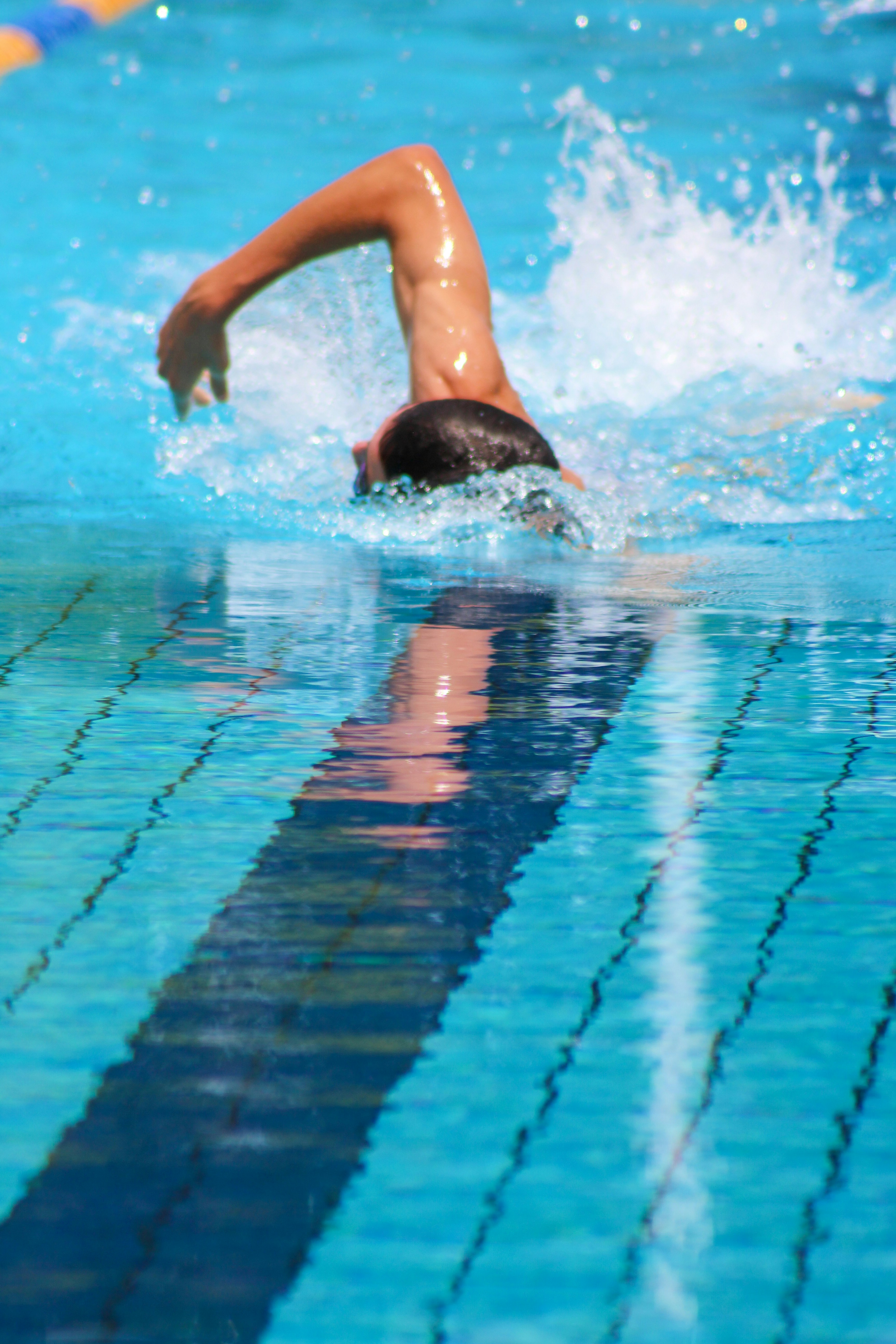
With the Pan Pacific Masters Games approaching, I've been thinking about a question that probably occupies the minds of many Masters swimmers: how much longer can I keep getting faster? At 54, I still train with the intention of improving, rather than simply maintaining what I can already do. At the same time, I know that ageing changes the way our bodies respond to training and competition. Reconciling those two realities isn't always straightforward when you're preparing to race. Some fascinating research has helped me think about the question differently, and given me a more encouraging perspective on what might still be possible.
Racing against the clock and the calendar
In November, I'll be competing at the Pan Pacific Masters Games on the Gold Coast, racing the 50, 100 and 200 metres freestyle. Swimming remains a huge part of my life, both as a coach and as someone who takes his own training seriously. Having competed at the World Masters Championships in Singapore last year, I've been preparing for another opportunity to see what I can achieve. I still work on my technique, experiment with different training methods and look for the small improvements that can make a difference in a race. Yet as the competition approaches, I keep coming back to the same question: how much faster can I realistically expect to swim at my age?
It's an interesting dilemma because the intention to improve doesn't make the physiological effects of ageing disappear. Maximum aerobic capacity declines, muscle mass and power become harder to maintain, and recovery can take longer. I can recognise those realities without wanting to treat every birthday as a reason to lower my expectations. At some point, I wonder whether the gains from training and technique must inevitably be overtaken by biology. The research doesn't remove that possibility, but it does suggest that the relationship between age and performance is more complicated than a steady slide backwards.
What 40 years of Masters swimming tells us
Imagine a swimming competition where everyone has exactly one hour to swim as far as they can. Instead of recording who finishes 100 metres fastest, the result is how many metres each person covers before the hour is up. This is the format of US Masters Swimming's one-hour events. A study published in March 2026 in the Open Access Journal of Sports Medicine examined more than 50,000 entries from these events, recorded between 1985 and 2024. The researchers compared the best distances achieved at different ages to see how endurance swimming performance changes as swimmers get older.
The pattern they found was a gradual reduction in the distance covered as age increased. For women, the estimated reduction was about 0.5% for each additional year of age, up to around 69. For men, it was about 0.9% for each additional year of age, up to around 75. Beyond those ages, the decline became steeper. To put those percentages into familiar terms, 0.5% of a 3,000-metre swim is 15 metres, while 0.9% is 27 metres. Those distances are simply an illustration of the percentages, not a prediction that someone swimming 3,000 metres today will swim exactly 15 or 27 metres less next year.
The important distinction is that the researchers were comparing performances at different ages, not tracking every swimmer's progress year after year. An older swimmer in the results was not necessarily the same person as a younger swimmer recorded years earlier. The findings therefore show a broad age-related pattern, rather than what must happen to you or me. They also concern an hour-long endurance event, so the percentages cannot be used to calculate how my times for 50, 100 or 200 metres will change. The encouraging message is that the decline in these endurance results was relatively gradual across much of adult life. For my own racing, that offers perspective on getting older, but it does not predict my next finishing time.
Ageing and getting slower aren't quite the same thing
As a swimming coach, I've seen adults who start swimming seriously later in life continue improving for years. Someone who begins structured training at 45 might be swimming considerably faster at 55, despite being ten years older. Swimming performance depends on much more than physiological capacity because it is such a technical sport. Body position, drag, propulsion, coordination, pacing and breathing all influence how efficiently we move through the water. A swimmer can lose some physiological capacity while becoming technically better, and those technical gains can sometimes more than compensate for the decline.
An earlier longitudinal study adds an interesting perspective to that coaching observation. It followed 45 champion Masters swimmers whose competitive histories averaged 23 years. The researchers found that some swimmers continued improving well into their Masters careers. Practice and training appeared to offset aspects of the underlying age-related decline, particularly during the earlier years of participation. That doesn't mean ageing can be defeated indefinitely, but it does mean that physiological ageing and actual race performance don't necessarily move in parallel.
What about those of us who have been swimming for decades?
A relative newcomer may have considerable room for technical improvement, but the question feels different for someone who has been swimming consistently for twenty years. After years of swimming and coaching, I suspect many of the easy improvements are behind me. I can't expect dramatic gains simply from learning to breathe properly or fixing an obviously inefficient stroke. Instead, improvement becomes an exercise in marginal gains and in understanding which details still deserve attention. That makes progress harder to find, but it doesn't make the search any less worthwhile.
As I prepare for the Gold Coast, I'm thinking about whether I can improve my catch and maintain a better body position at race pace. I'm also considering how to develop more power without compromising technique. Another part of the challenge is structuring my training so that I arrive properly rested and ready to race. A study of one-hour swimming performance cannot tell me what will happen in a 50-metre freestyle event, and I don't want to pretend otherwise. What I take from it is a more measured kind of encouragement: getting older doesn't necessarily remove the possibility of improvement, although it may change how I pursue it.
Training still makes a difference
A study published in the International Journal of Sports Medicine in 2018 examined the relationship between training volume, age and performance in Masters swimmers. The researchers analysed 692 swimmers cross-sectionally and followed a smaller group of 98 swimmers over time. They found that training volume was associated with better swimming performance, with a relationship that appeared stronger among older swimmers. This was observational research, so it cannot establish that increasing training volume will automatically make every older swimmer faster. Nevertheless, it suggests that maintaining a meaningful training stimulus may become particularly important as we age.
My interpretation is that Masters swimmers need to strike a balance between challenge and recovery. We still need to give our bodies a reason to adapt if we want to improve. At the same time, we need to be thoughtful about strength, intensity and the total training load we can sustain. The goal shouldn't necessarily be to reproduce the training we did at 25. It should be to train as effectively as possible at 55, 65 or 75, with an approach that reflects the swimmer we are now.
The remarkable thing about Masters swimming
A separate study of US Masters swimming records between 1981 and 2021 found that leading performances had improved substantially over those four decades. The average improvement across the comparisons was approximately 0.52% per calendar year. In other words, while individual swimmers inevitably age, successive generations of Masters swimmers have been setting faster times. Possible explanations include changes in training methods, participation, equipment and the competitive standard. Whatever the combination of influences, the finding reminds me that our understanding of what older swimmers can achieve continues to evolve. The limits of Masters swimming performance aren't necessarily as fixed as we might imagine.
So what am I expecting at the Pan Pacs?
When I stand behind the blocks on the Gold Coast this November, I'll be thinking about my race rather than regression equations. I'll have specific times I'd like to achieve, and I'll be disappointed if I feel I haven't swum to my potential. That's part of competing, even when you understand that the bigger picture is more complicated than the result on the scoreboard. Researching this subject has made me consider what I'm really measuring. I'm not trying to establish whether I can swim as fast as a 25-year-old version of myself. I'm trying to discover how fast the 54-year-old version can swim, and those are two quite different questions.
Age-related physiological decline is real, and eventually it affects all of us. But actual swimming performance reflects a combination of physiology, technique, training, experience and opportunity. There is still plenty within that combination that we can influence. For those of us who love swimming, perhaps that is the most encouraging finding of all. We can't control how old we are, but we can continue working on how well we swim. For the moment, at least, I'm not ready to stop chasing the clock.
Research references
-
Rubin, R. T., et al. (2026). Declines in endurance swimming performance with age: Analysis of 40 years of Masters one-hour distance swims. Open Access Journal of Sports Medicine.
-
Rubin, R. T., et al. (2013). Declines in swimming performance with age: A longitudinal study of Masters swimming champions. Open Access Journal of Sports Medicine.
-
Lapierre, S. S., Baker, B. D., & Tanaka, H. (2018). Age-related Changes in Training Stimuli and Performance in Masters Swimmers. International Journal of Sports Medicine.
-
Hartley, A. A., & Hartley, J. T. (2024). Secular Changes in Masters Swimming Performances: A 40-Year Follow Up. Experimental Aging Research.