
Confidence
Free articleHow to gain experience in open water
A progressive way to learn open water skills without rushing from the pool into conditions you cannot yet read.
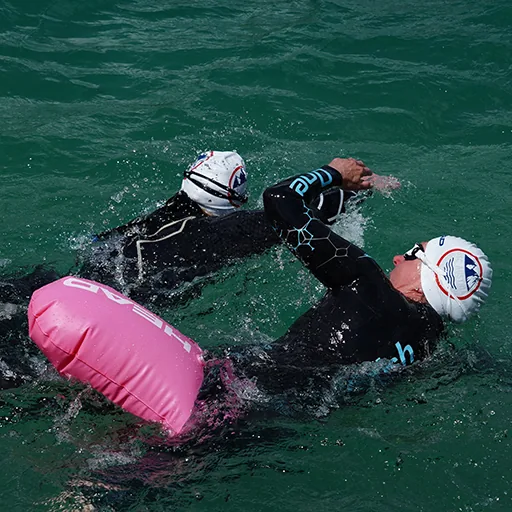
I began swimming regularly outside the pool in 2007 at Clovelly in Sydney. I already knew how to swim. I did not yet know how to read water, choose a line or stay relaxed when a wave arrived at the wrong moment.
That distinction matters. Pool ability gives you a base. Open water experience comes from time in open water, provided the conditions are suitable for learning.
Start where you can stop
For the first few sessions, stay close to shore and swim parallel to it. Use two visible points to create a short loop.
Practise entering, settling the breath, swimming for a few minutes and returning. Do not measure success by how far offshore you travelled.
Learn the location from other swimmers
Joining an experienced local group changed my own swimming. People knew where the current usually ran, which wind made the bay uncomfortable and where entries became slippery.
That local knowledge is more useful than confidence built on guesswork. It also gives you company if something changes.
This AquaEdge video shows some of the open water work in practice.
Practise skills in the pool
You can learn several open water habits without waves:
- sight forward every six to ten strokes
- choose a landmark at the end of the lane
- swim around a temporary marker when the lane setup allows it
- complete longer repeats without using the wall as a full rest
- breathe comfortably to either side
This sighting drill shows how to connect forward vision with the breath. These endurance set ideas can help with continuous effort.
Pool practice makes the movement familiar. The bay teaches you when to use it.
Add one complication at a time
Once a calm swim feels manageable, try a slightly longer loop. On another day, practise a buoy turn. Later, swim with a little chop or a busier group.
If you add cold water, distance, poor visibility and crowd contact together, it becomes difficult to learn anything except that the session felt hard.
Keep a simple record
After the swim, write down:
- the conditions
- where you swam
- what felt calm
- what drew too much attention
- one thing to repeat next time
This makes experience visible. A swimmer who has completed ten carefully chosen bay sessions has more useful evidence than someone who survived one difficult race.
Open water will never become as predictable as a pool. That is part of its appeal. The skill is not controlling the environment. It is noticing what the water is doing and making a sensible decision with the ability you have that day.