
Technique
Free articleHow to improve body rotation in freestyle
Practical cues and drills for connecting the shoulders, hips and breath without over rotating.
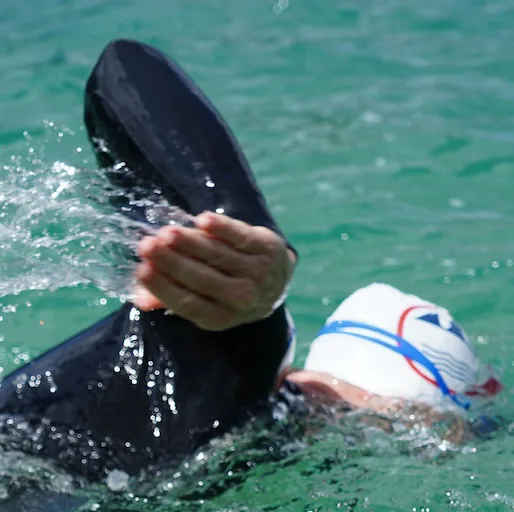
Rotation is easy to exaggerate. Tell a swimmer to rotate more and they may roll almost onto their back, cross the lead arm over the centre line or pause at the front of the stroke.
The useful amount is smaller. The shoulders and hips turn together while the head stays quiet, except when it joins the turn for a breath.
What good rotation solves
Rotation gives the recovering arm room to move, helps the hand set the catch and brings the mouth towards the air. It also connects the pull to the larger muscles of the trunk.
It should not feel like twisting the shoulders separately from the hips. Imagine the ribcage and pelvis travelling as one long unit.
Drill 1: single arm freestyle
Leave one arm extended and swim with the other. Keep the lead hand in line with the shoulder. As the working arm finishes, allow the hip on that side to turn with it.
If the lead arm presses down every time you breathe, slow the drill and make the breath smaller.
Ian Thorpe’s single arm work in this video is worth watching. Look at the relationship between the hip, shoulder and recovering arm rather than copying the size of his movement.
Drill 2: six kicks and switch
Kick on one side with the lower arm extended. Keep one goggle in the water and the body long. After six kicks, take one stroke and change sides.
This drill exposes whether you can hold a side position without scissoring the legs or lifting the head.
Drill 3: fingertip recovery
During the recovery, let the fingertips pass close to the surface. The drill can encourage a relaxed elbow and enough shoulder turn to clear the arm.
Do not force the fingertips to trace the body. The name of the drill is a cue, not a fixed shape for every shoulder.
Connect rotation to the breath
The head should not begin the breath by lifting forward. Let the body start turning, then allow the head to travel with it. Aim to clear the mouth while keeping part of the face in the water.
After two lengths of drill, swim two lengths normally. Keep only one thought: shoulder and hip together.
Common signs of too much rotation
- the lead hand crosses the centre line
- the legs separate during every breath
- the stroke pauses on each side
- the head moves with every non breathing stroke
Good rotation feels connected, not dramatic. If you can breathe with less disturbance and hold the same rhythm for longer, the movement is probably doing its job.