
Technique
Free articleHow to coordinate breathing in freestyle
Pool and open water drills for a smaller, calmer breath that fits inside the stroke.
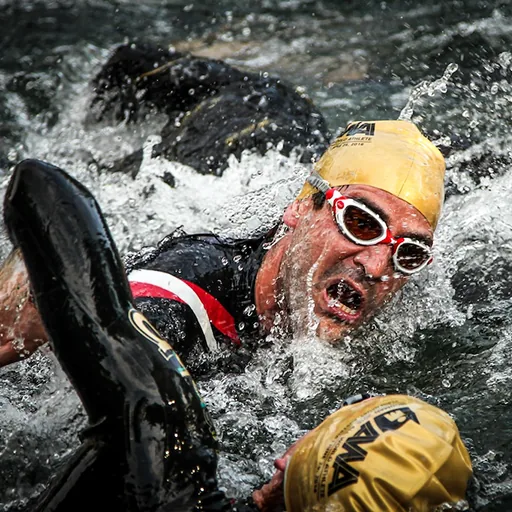
Most breathing problems I see are timing problems. The swimmer can take in enough air. The trouble is what happens before and during the breath.
They hold the breath underwater, lift the head, rush the inhale and press down on the lead arm. One breath then disrupts the next two strokes.
Breathe out before you turn
Start with easy freestyle and let a steady stream of bubbles leave the nose or mouth while the face is in the water. The exhale does not need to be forceful. It simply needs to happen before the mouth reaches air.
This exhalation drill demonstrates the basic idea.
Some swimmers prefer a continuous trickle from the nose. Others release most of the air later in the stroke. Elite swimmers use different patterns. Choose the one that keeps you relaxed and ready to inhale.
Let the body bring you to the air
Begin the breath as the body rotates. Keep the lead arm supported and turn the head with the shoulders. The mouth only needs to clear the surface.
A useful cue is one goggle in. If both eyes are looking at the ceiling, the head has probably travelled too far.
Practise both sides without forcing symmetry
Being able to breathe on either side is useful in open water because wind, sun, chop or another swimmer may block your preferred side.
That does not mean every session must use a strict bilateral pattern. Practise the less familiar side during easy repeats, then choose a race pattern that suits your needs.
This bilateral breathing drill offers a straightforward progression.
Connect sighting to the breath
Do not try to inhale while looking directly forward. Lift the eyes briefly, return the face towards the water and continue into a normal side breath.
This sighting and breathing drill shows the sequence. I also demonstrate the problem with breathing straight ahead in this AquaEdge video.
Use rhythm rather than restricted breathing
A tempo trainer can help swimmers who pause or rush around the breath. Set a comfortable rhythm and place the breath within it. This video explains tempo trainer work.
I do not use long breath restriction sets as a general fix for breathing coordination. They can encourage tension and are not appropriate for unsupervised practice. If breath control work is prescribed, it should be done with qualified supervision and never involve underwater endurance contests.
Finish with normal freestyle. The best sign is not a bigger inhale. It is a breath that barely changes the stroke.