
Mindset
Free articleHow to stay focused in training and racing
A simple way to direct attention when a session becomes hard or a race becomes noisy.
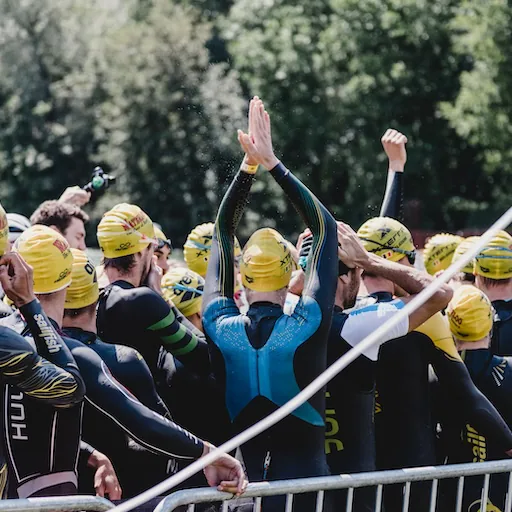
Nobody holds perfect concentration for an entire long swim. Attention wanders. A competitor moves past. Goggles leak. The mind starts replaying the poor turn from two laps ago.
Focus is the ability to notice that drift and return to the next useful task.
Separate decisions from noise
You can control your effort, breathing, stroke rhythm, navigation and response to a problem.
You cannot control another swimmer’s warm up, the lane draw, a change in weather or what happened five minutes ago.
This sounds obvious on land. It becomes less obvious when a race is moving quickly. Practise the distinction in training.
Use one cue at a time
Three technical instructions are usually two too many during a hard repeat.
Choose a cue that matches the problem in front of you:
- long exhale
- quiet head
- hold the line
- build now
“Focus” is less useful because it does not tell you where to place attention.
Identify the moments that need full attention
An entire session does not require the same mental intensity. Decide where attention matters most.
It may be the first three strokes after every turn, the final 25 metres of each repeat or the approach to a buoy. Between those moments, allow the rhythm to run without constant inspection.
Rehearse a routine
A race routine can be simple: arrive, check the course, prepare equipment, complete the same warm up and review three points in the plan.
The purpose is not superstition. A familiar sequence reduces the number of small decisions you need to make while nervous.
This discussion of the mental side of swimming is worth hearing.
Train with some distraction
Once a skill is stable, practise it when the lane is busier, when you are tired or when somebody swims close beside you. Open water athletes can rehearse contact and sighting in a controlled group.
Do this progressively. Chaos is not automatically good preparation.
When focus disappears
Use a short reset:
- Exhale fully.
- Name what is happening.
- Choose one action for the next 20 strokes.
For example: I started too hard. Easy exhale. Hold this swimmer’s feet until the turn.
That is more useful than a speech about mental toughness. Good concentration is practical. It keeps returning to the piece of the race you can still influence.