
Technique
Free articleHow to swim with less wasted effort
A practical look at body position, propulsion and rhythm for pool and open water swimmers.
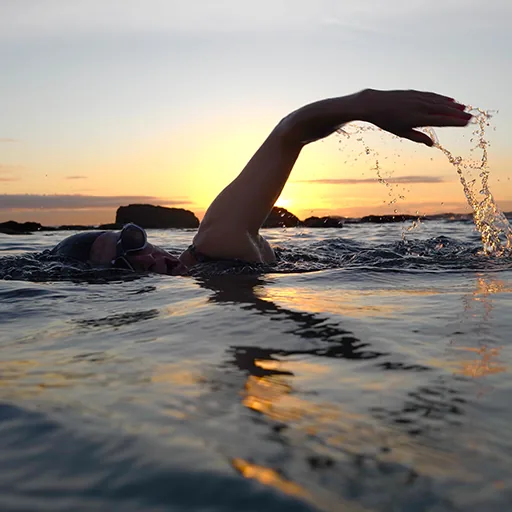
Swimmers often describe efficiency as “gliding more”. That can help if the stroke is rushed, but a longer glide is not automatically efficient. Sometimes it is simply a pause while speed disappears.
I look at three things: how much drag the swimmer creates, how well the catch moves water backwards and whether the rhythm can be repeated.
Begin with body position
A high head, dropped hips or crossover entry creates resistance before the swimmer starts the pull.
Try a relaxed push and glide. Notice where the body settles. Then swim easy freestyle with the same long neck and narrow line. Do not kick harder to hold the legs up. Change the position first.
Find pressure on the water
The hand and forearm need to direct force backwards. If the hand slips down or out, the stroke may feel busy without moving much water.
Sculling and single arm work can help a swimmer notice pressure. Keep the movement small. The goal is not to reproduce the drill during freestyle, but to recognise the useful part of the catch.
Keep a rhythm you can afford
Efficiency is pace relative to effort. A beautiful stroke that can only be maintained for 25 metres is not yet an efficient distance stroke.
Use repeat 100s or 200s and track pace, stroke count and breathing. Small changes across the set are normal. A sharp rise in stroke count or effort shows where the current rhythm stops being sustainable.
Adapt outside the pool
Chop may require a shorter front end and slightly quicker stroke. A wetsuit changes buoyancy. Drafting changes the effort needed for a given speed.
Good open water technique is not one fixed shape. It is a small range of useful options built on sound balance and propulsion.
Use drills with a reason
Catch up, single arm and sculling are common drills. Choose one because it addresses something you observed.
This AquaEdge video shows catch up drill work. After a short drill repeat, swim normal freestyle and keep one cue from it.
Strength work, sleep and sensible training volume all support technique. But the main work remains specific: notice where effort is being lost, make one change and test it in the full stroke.
You do not need a perfect looking stroke. You need one that moves you at the required pace without charging more energy than you can afford.