
Technique
Free articleStroke rate in open water racing: Part 1
What elite race observations can teach us about stroke rate, and why copying an elite number is a mistake.
I became interested in stroke rate after counting strokes during elite 10 kilometre races. The leading swimmers were turning their arms over much faster than many age group swimmers I coached.
In the races I reviewed, top swimmers were around 80 to 85 strokes per minute after the first buoy and reached roughly 87 to 93 near the finish.
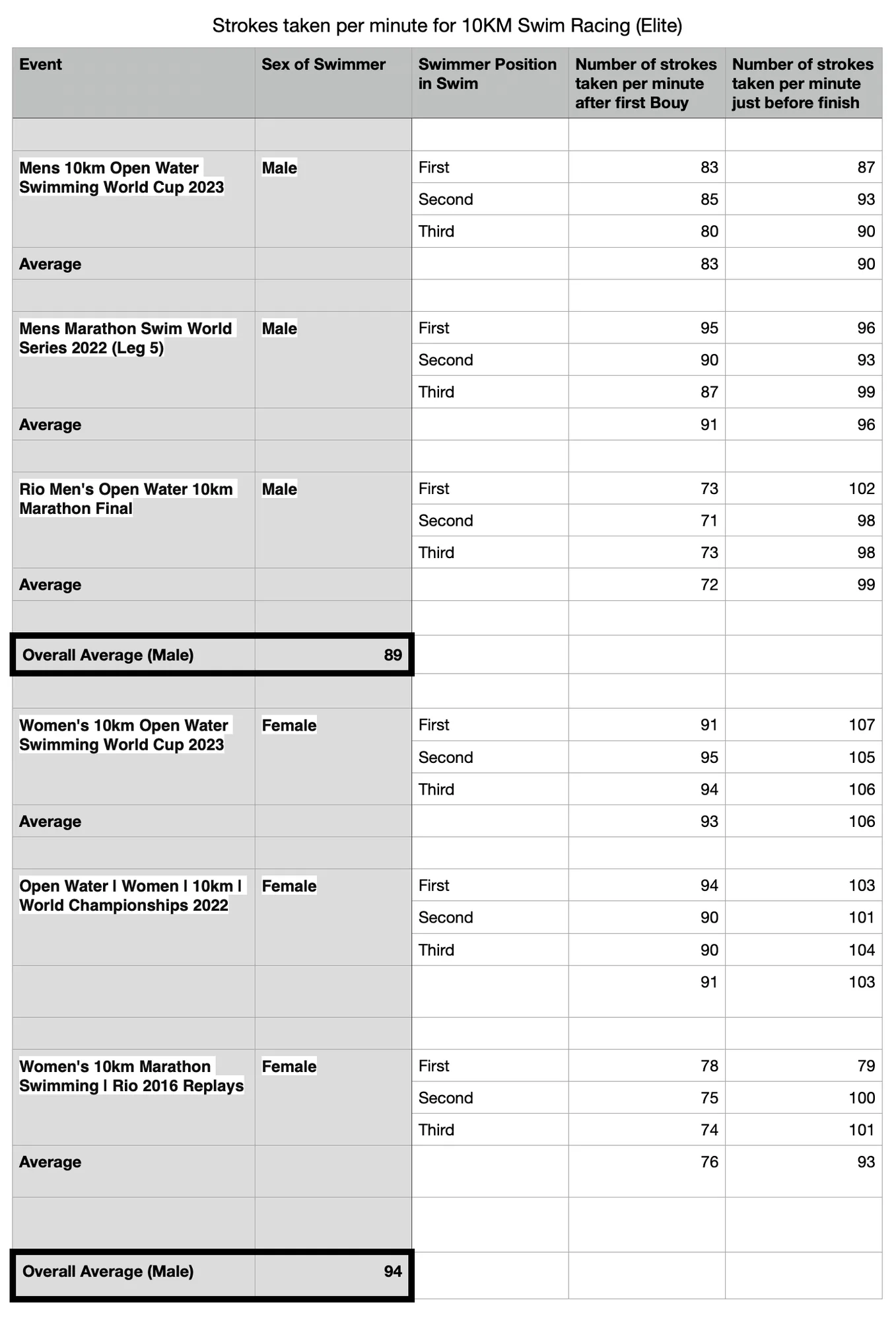
Table 1: Observed stroke rates for the first three finishers in elite 10 kilometre races.
Research by López Belmonte and colleagues also examines stroke rate in high level open water performance.
Why a quicker rhythm can help
Open water rarely provides a perfectly still surface. A quicker stroke gives the swimmer more frequent opportunities to establish pressure and can reduce an overlong pause at the front.
It also supports tactical changes. Elite swimmers must accelerate around turns, respond to a break and finish quickly.
Why rate is not the whole answer
Increasing stroke rate can shorten the stroke. The hand may slip, the breath becomes late and the shoulders tighten. At that point the swimmer is spending more energy without producing the expected speed.
This is why an elite number should not become your target. Elite swimmers have the fitness and mechanics to make those numbers productive.
Many non elite swimmers I observed were around 50 to 65 strokes per minute. Some would benefit from a higher rate. Others first needed a better catch or less drag.
Measure rate and speed together
Count one hand entry for 15 seconds and multiply by four, or use a watch that records stroke rate. Then note the pace.
Try several 50 metre repeats at your normal rate. Increase by two or three strokes per minute and repeat. Ask:
- did pace improve?
- did effort rise sharply?
- did the catch still feel connected?
- could you hold it for the required distance?
The relationship matters more than the rate alone.
Using a tempo trainer
A tempo trainer beeps at a chosen interval and gives the swimmer an external rhythm. I use one in my own sessions and with swimmers who need to change rate gradually.
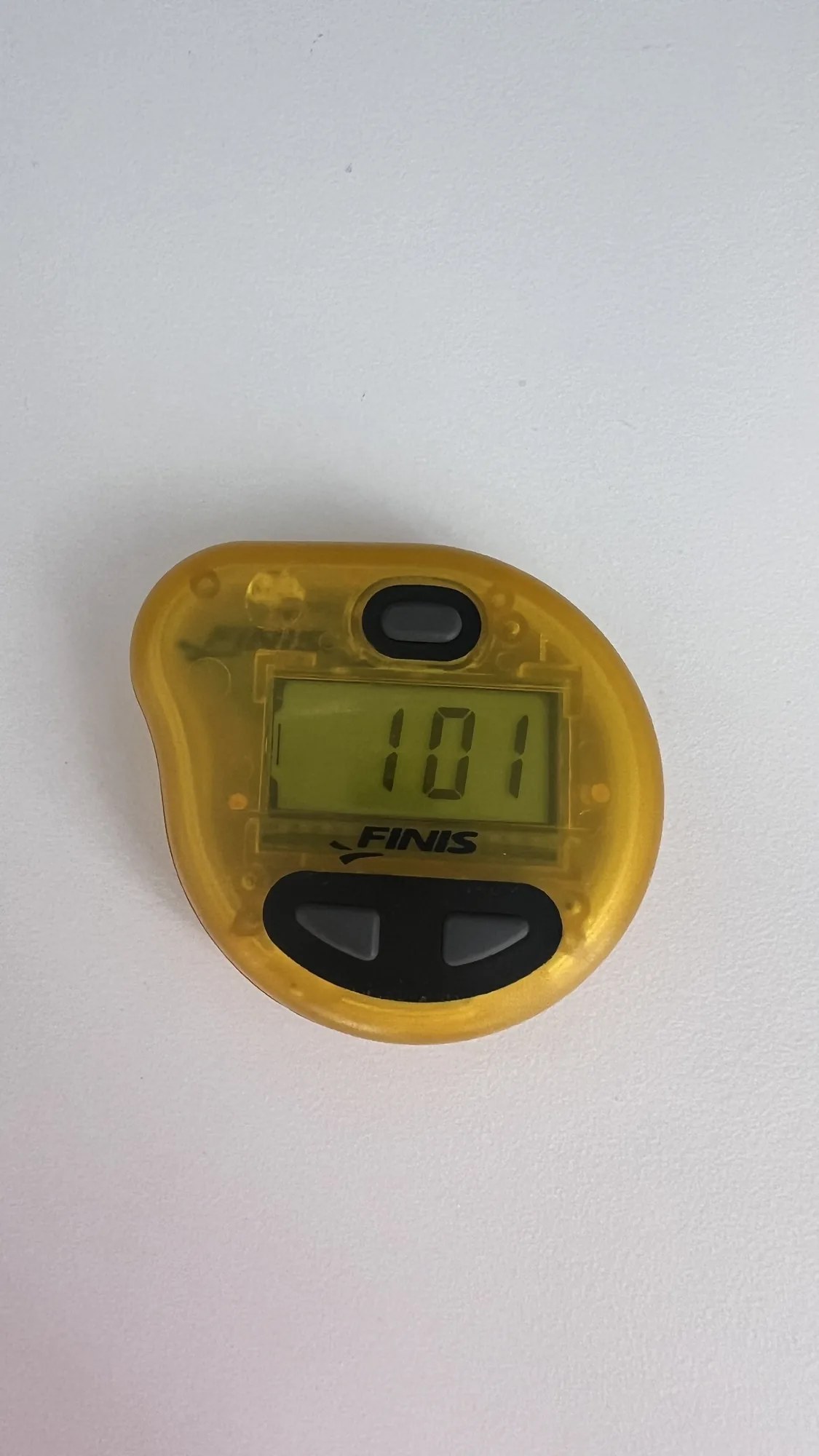
My Finis Tempo Trainer. I have no commercial relationship with Finis.
Begin close to your current rhythm. Make small changes and keep the repeat short enough to hold technique. The tool is there to make rate measurable, not to bully the stroke into a number.
Part 2 looks at what I observed during Melbourne’s Port to Park swim.