
Training
Free articleThree performance measures for open water swimmers
What aerobic power, lactate thresholds and critical velocity can add to an open water training plan.
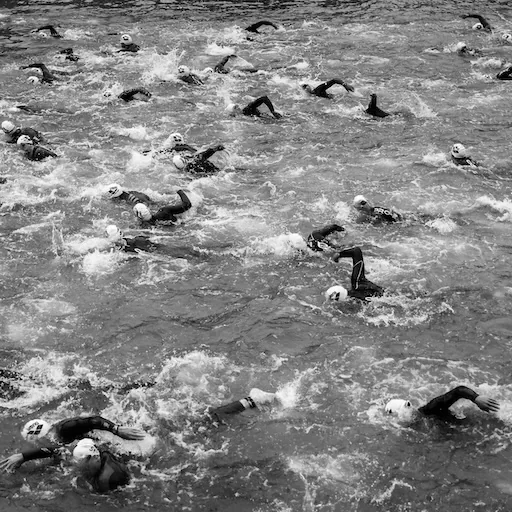
A stopwatch can tell you how fast you swam. It cannot tell you why that pace felt sustainable on one day and impossible on another.
Research on open water swimmers uses several physiological measures to explain part of that difference. A recent paper in Physiologia discusses aerobic power, lactate thresholds and critical velocity.
These terms are useful when they improve a training decision. They are less useful when they become impressive numbers without context.
Aerobic power
Aerobic power describes the body’s ability to use oxygen during hard exercise. VO2 max is one common measure.
Open water racing relies heavily on the aerobic system, particularly as distance grows. A higher aerobic capacity gives the athlete more room to sustain speed, but it does not replace stroke efficiency or race skill.
Pool training can develop this through controlled intervals at strong aerobic effort. The set should be difficult enough to challenge the system and repeatable enough to preserve technique.
Lactate thresholds
Blood lactate changes as effort rises. Threshold estimates help coaches describe the transition from easier steady work towards intensities that become harder to sustain.
For long swims, work around the first threshold can build the ability to hold a useful pace for an extended period. The exact percentage of maximum effort varies between swimmers, so a laboratory style label should not be guessed from feeling alone.
Without lactate testing, pace, breathing, repeat consistency and perceived effort can still guide the session.
Critical velocity
Critical velocity is estimated from performances over several distances. It provides a practical reference for the boundary between sustainable and unsustainable swimming intensity.
A coach might calculate it from timed 200, 400, 800 and 1,500 metre efforts. The chosen distances and method matter.
Once estimated, critical velocity can guide sets such as 10 × 200 metres with short rest. It is a reference, not a permanent identity. Fitness, fatigue and testing conditions change it.
Speed still belongs in a distance program
Open water races include starts, turns, attempts to bridge to a group and fast finishes. Distance swimmers need access to speed even when most training is aerobic.
Short, high quality 50s or 100s with generous recovery can preserve that ability. The purpose is to swim fast with control, not to add fatigue for its own sake.
Local events such as Pier to Perignon and Pier to Pub also place different tactical and environmental demands on the swimmer.
Melbourne conditions are a separate skill
The study does not reproduce Port Phillip Bay. Cold water, wind, chop, navigation and a crowded start all change the cost of a pace.
Train in relevant conditions when they are safe and appropriate. Begin conservatively. A strong aerobic profile does not remove the need for acclimatisation, judgement or open water experience.
The pool gives clean data. The bay tells you whether the swimmer can use it.
For more on pool testing, read What a 7 × 200 metre lactate test can tell a triathlete.
If you want to turn these measures into a practical plan, view AquaEdge coaching options, availability and pricing.