
Beginner Swimming / Freestyle Technique
Free articleWhy Am I Out of Breath After 25 Metres of Freestyle?
Why swimming can feel surprisingly exhausting for beginners, and how to develop a more comfortable breathing rhythm.
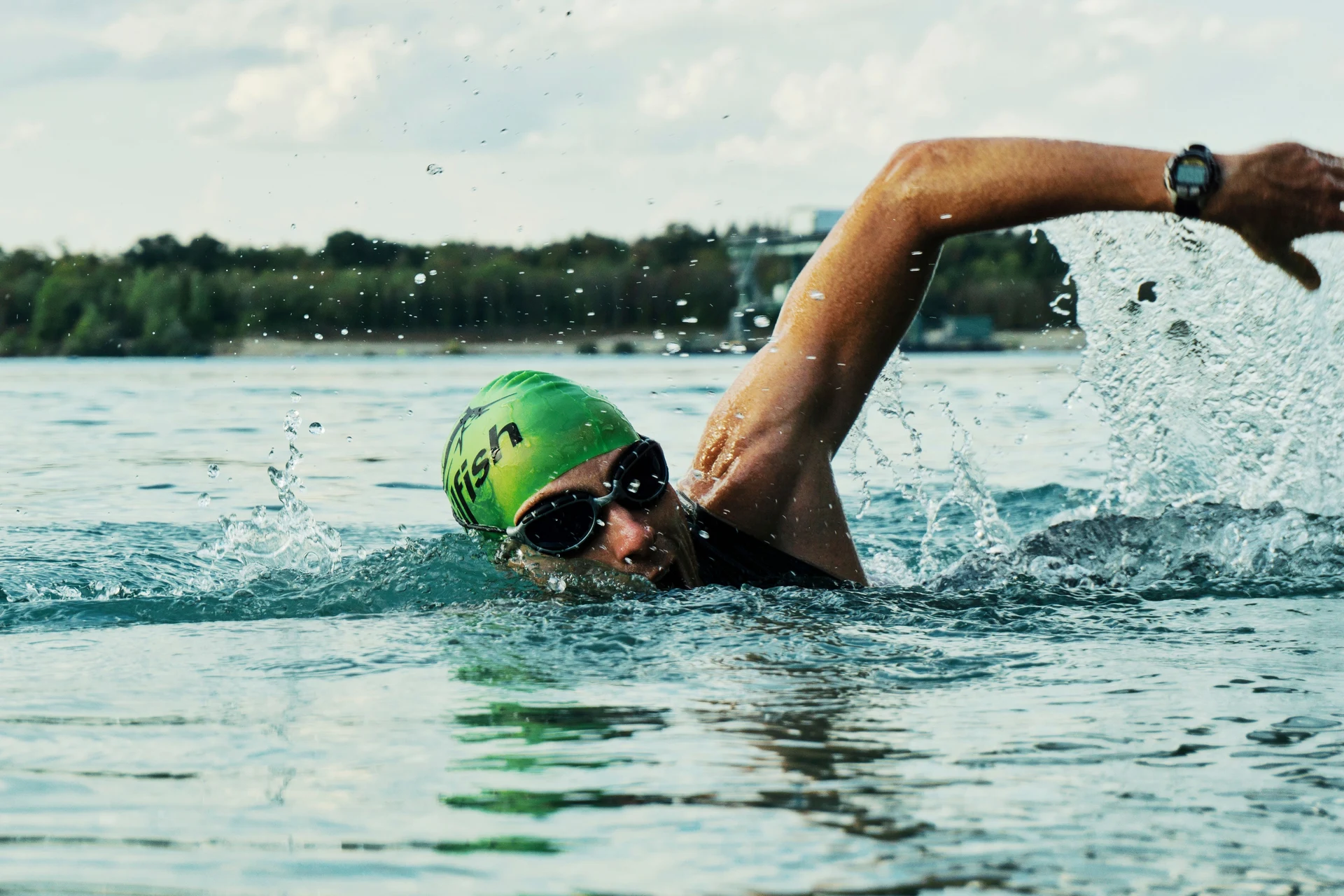
One of the most common difficulties I encounter when coaching adult beginners is their inability to swim more than a length or two of freestyle without becoming breathless. It's often puzzling for the swimmer. They might be reasonably fit, able to walk or cycle considerable distances, yet find themselves holding onto the wall after just 25 metres, struggling to catch their breath.
Understandably, many assume they need to improve their fitness before they'll be able to swim further. While cardiovascular fitness certainly plays a role, it's often not the main reason they're struggling. In many cases, the difficulty lies in how they're breathing and the amount of effort they're using to move through the water.
Why does freestyle feel so exhausting?
Unlike running or cycling, where we can breathe whenever we want, freestyle requires us to coordinate breathing with our arm movements and body rotation. For someone learning the stroke, this can be surprisingly difficult. When I watch a beginner swimming, I'm interested in what happens to their breathing, body position and kicking as they prepare to take a breath.
A common pattern is for the swimmer to hold their breath underwater, then attempt to exhale and inhale when their mouth reaches the surface. This leaves very little time to take in air, often causing them to lift their head or turn excessively in an effort to keep their mouth clear of the water. Their hips and legs may then sink, increasing resistance and prompting them to kick harder or pull more forcefully to compensate. The additional effort increases their need to breathe, making an already difficult situation worse.
Learning to breathe out underwater
One of the first things I teach beginners is to establish a comfortable exhalation while their face is underwater. This doesn't mean forcefully blowing out all their air as soon as their face enters the water. A gentle, controlled exhalation through the nose, mouth or both is generally a better starting point, with the aim of having enough air expelled to allow a comfortable inhalation when the mouth reaches the surface.
Interestingly, when I'm racing, my own breathing can be quite different. At higher intensities, I often exhale underwater rather explosively as I approach the next breath, allowing me to clear the remaining air quickly before inhaling. However, this is not something I would encourage a beginner to imitate. They have enough to concentrate on without adding a forceful exhalation to an already complicated movement.
For someone just learning, I prefer to begin at the pool wall, in water where they can stand comfortably. Take a normal breath, place your face in the water and gently release air before returning to the surface to inhale. Repeat this until the process feels natural and unhurried, without turning it into a breath-holding exercise.
Don't leave your breath too late
One of the most frequent breathing problems I see is swimmers initiating their breath too late in the stroke cycle. Rather than beginning to turn their head as their body rotates and the arm on the breathing side completes its underwater pull, they wait until that arm is already well into its recovery. By then, the opportunity to take a comfortable breath is rapidly disappearing.
The result is often a hurried movement in which the swimmer lifts or turns their head excessively to get their mouth out of the water. This can cause the leading arm to press down, the hips to drop and the entire stroke rhythm to become disrupted. Worse still, the swimmer may only manage a small, rushed inhalation before their face returns to the water, leaving them feeling increasingly short of breath.
I encourage swimmers to think about allowing the head to rotate with the body, rather than treating breathing as a separate movement that happens after the arm has finished its stroke. The head should begin turning early enough for the mouth to clear the water comfortably, and return to its normal position as the recovering arm moves forward. This timing is one of the most important skills for beginners to develop and is covered in more detail in my earlier article, How to Coordinate Breathing in Freestyle.
You may be working harder than necessary
Another thing I frequently notice is excessive kicking. Beginners often use their legs much more vigorously than necessary, particularly when they're concerned about keeping their body afloat. Because the leg muscles are large and can consume considerable energy, a powerful continuous kick can quickly increase the swimmer's breathing demands.
I often encourage beginners to experiment with a smaller, gentler kick while maintaining a reasonably horizontal body position. The kick still helps with balance and stroke coordination, but it doesn't need to provide most of the propulsion. Swimming a little more slowly can also help, particularly if the swimmer has a tendency to increase their stroke rate whenever they begin feeling breathless.
How often should a beginner breathe?
One question I regularly hear is whether swimmers should breathe every two or every three arm strokes. There's a common belief that breathing every three strokes is somehow better technique because it encourages breathing on both sides. While bilateral breathing is a useful skill, particularly in open water, I don't think beginners need to impose that restriction on themselves.
If you're struggling to get enough air, breathing every two strokes to whichever side feels most comfortable is a sensible place to start. This provides more frequent opportunities to inhale and makes it easier to establish a consistent rhythm. I'd much rather see a beginner swimming comfortably and breathing every two strokes than struggling through a length because they're trying to breathe every three or five.
A simple progression for beginners
Rather than asking a beginner to swim repeated lengths while concentrating on several things at once, I prefer to work through shorter exercises that isolate the main difficulty. The following progression can be practised in a supervised pool, where the swimmer can stand comfortably when necessary.
1. Establish a comfortable breathing rhythm
Begin at the wall, practising gentle exhalation underwater followed by a normal inhalation at the surface. Concentrate on making the process relaxed and repeatable rather than staying underwater for any particular duration. Once this becomes comfortable, introduce the same breathing pattern during short swims.
2. Practise short distances with correct timing
Swim just 5–10 metres at an easy pace, breathing every two strokes to your preferred side. Concentrate on beginning the head rotation early enough to take a comfortable breath without lifting your head. If the breath feels rushed, stop and try again over a shorter distance.
3. Reduce unnecessary effort
Repeat the short swim while concentrating on a smaller kick and relaxed arm recovery. Notice whether reducing your effort makes it easier to maintain your breathing rhythm. If the stroke begins to feel hurried, shorten the distance rather than pushing through.
4. Gradually increase the distance
Once you can maintain your breathing comfortably over a short distance, extend it towards 15 or 25 metres. Allow sufficient rest between attempts so that you begin each swim feeling recovered. Only increase the distance when you can maintain roughly the same breathing rhythm and technique.
How do you know your breathing is improving?
I wouldn't measure progress solely by the number of metres someone can swim. A beginner might complete 50 metres through considerable effort while still struggling to coordinate their breathing. That doesn't necessarily mean they've developed a technique they can sustain over longer distances.
Instead, I look for changes in how they're swimming. Are they taking their breaths without lifting their head excessively, and can they maintain a relaxed kick and reasonably consistent stroke rhythm? Perhaps most importantly, do they finish a short swim feeling that they could comfortably repeat it?
What if you're still struggling?
If you continue to become breathless after a short distance, it can be worth having someone observe your stroke. An experienced coach can often identify problems that are difficult to recognise while you're swimming, particularly late breathing, excessive head lifting or a kick that becomes increasingly vigorous during the breath. Sometimes a relatively small adjustment to the timing of your breathing can make a noticeable difference.
It's also worth remembering that not all breathlessness is a technique problem. Unusual or disproportionate shortness of breath, wheezing, chest discomfort or dizziness should be assessed medically rather than simply pushing harder in the pool. Beginners should develop their breathing in a supervised environment and avoid prolonged breath-holding or exercises that deliberately restrict access to air.
Learning to swim further starts with swimming more comfortably
When I work with someone who is exhausted after 25 metres, my first priority is rarely to have them swim further. I want to understand why that distance is so demanding and whether their breathing and swimming technique are contributing to the problem. Often, improving the timing of their breath, reducing unnecessary kicking and finding a more sustainable pace can make a considerable difference.
Once these elements begin working together, increasing distance becomes much more manageable. Fitness will develop with practice, but good breathing coordination provides the foundation for using that fitness effectively. For someone who simply wants to swim a few comfortable lengths of freestyle, this is often the most useful place to start.
Need help with your freestyle breathing?
At AquaEdge Swim Academy, I work with adult swimmers to improve breathing coordination, body position and freestyle technique. Private pool lessons are available year-round, with seasonal open-water coaching in Port Phillip Bay. You can find out more at AquaEdge Swim Academy.